What Is a Work Package? A Plain-Language Explanation for First-Time EU Applicants
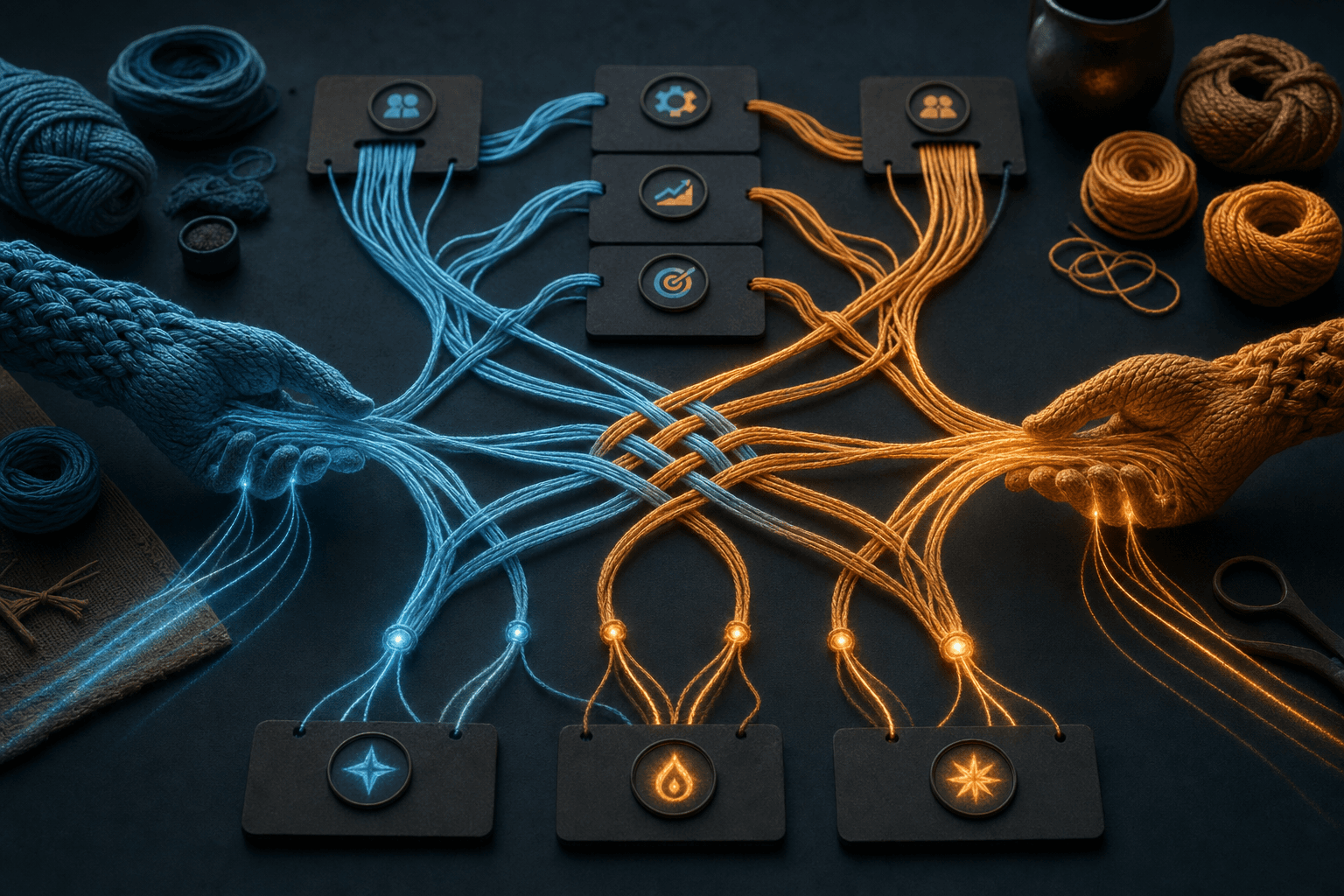
A work package is a chunk of accountable work
A work package, often shortened to WP, is a defined chunk of project work with a clear purpose, lead partner, tasks, deliverables, timing, and budget effort. In a Horizon Europe or Erasmus+ proposal, it is how you show that the consortium can turn an idea into managed delivery. Evaluators read work packages to check whether the plan is credible, not just attractive.
A good WP answers a practical set of questions. What will be done. Who leads it. Which partners contribute. What outputs will exist at the end. Which deliverables prove progress. How much staff effort is needed. How the WP connects to the rest of the project.
Think of the proposal as a contract before the contract. The work package table is one of the places where vague ambition becomes operational detail. If the narrative promises a training model, a policy toolkit, a digital platform, or a community programme, the WP structure must show the path from design to testing to use.
For first-time applicants, the main mistake is writing WPs as themes. A WP is not just “innovation” or “engagement”. It is a managed block of work that someone can run, report on, and finish.
The usual WP breakdown
Most EU cooperation proposals use a small set of WPs. In our consortium graph, we track 83,490 projects from Erasmus+, Horizon 2020, and Horizon Europe: 24,823 Erasmus+ projects, 35,389 Horizon 2020 projects, and 23,278 Horizon Europe projects. Across this kind of material, the practical pattern is stable: one WP for management, several WPs for core delivery, and one WP for communication, dissemination, or exploitation.
A simple first draft often starts with these blocks:
- Management and coordination, including reporting, meetings, risk tracking, quality control, and ethics where relevant.
- Research, needs analysis, mapping, or co-design, depending on the programme and topic.
- Development or implementation, such as pilots, training, tools, services, methods, or field work.
- Testing, validation, evaluation, or learning loops with users and partners.
- Dissemination, communication, exploitation, policy uptake, community building, or sustainability.
For a small cooperation project, fewer WPs can be enough. For a larger Horizon Europe proposal, more separation may help evaluators see technical dependencies and partner roles. A practical drafting range is often a compact set of WPs, not a long catalogue of micro-activities. The goal is readability. Each WP should be large enough to manage, but specific enough to review.
How evaluators read the WP table
Evaluators do not read the WP table as a formality. They use it as a stress test. The table tells them whether the project has a real operating model, whether partners have meaningful roles, and whether the promised outputs fit the available effort.
They usually scan for alignment first. Objectives in the narrative should map to tasks in the WPs. Tasks should lead to deliverables. Deliverables should support outcomes. If the proposal says it will reach communities, train practitioners, publish resources, or test a digital tool, the WP table must contain the work needed to make that happen.
They also check ownership. A strong WP has a named lead with the right competence. Partners should not appear only as decoration. If a partner is responsible for schools, municipalities, patients, cultural organisations, founders, or NGOs, their effort should be visible where that access is needed.
Timing matters too. A needs analysis that finishes after the pilot starts creates doubt. Dissemination that begins only at the end looks like publicity, not uptake. A platform build that has no testing period looks risky. When the table, Gantt logic, deliverables, and budget tell the same story, evaluators can trust the plan faster.
The person-month self-check
Person-months are where many elegant WP structures break. A person-month is a unit of staff effort. It tells evaluators how much human work the consortium plans to spend on a task or WP. If the distribution is wrong, the proposal can look underplanned, overmanaged, or disconnected from its own ambitions.
The recurring pathology is easy to spot. The management WP absorbs too much effort compared with delivery. Dissemination is underfunded, so the proposal promises uptake without paying for the labour of reaching people, preparing materials, running events, maintaining channels, or supporting adoption. Core WPs then carry the real work, but not always enough staff time to do it well.
Use this self-check before submission:
- Compare management effort with project size, partner count, reporting load, and risk level.
- Check whether dissemination has enough effort for real communication, not only a final event and a few posts.
- Match each deliverable with the tasks and staff time needed to produce it.
- Look for partners with major responsibilities but tiny effort allocations.
- Look for partners with large effort allocations but unclear tasks.
- Test whether digital outputs include design, build, content, user testing, launch, maintenance, and handover.
For a concrete digital example, read our worked article on planning a digital work package. If your proposal includes a platform, catalogue, member area, event space, knowledge base, or AI assistant, StrandsUnited can help turn that WP into an operable plan. Our platform work is built around that gap between proposal text and delivery.
Where this comes from
This explanation comes from our work with EU cooperation teams and from our grant intelligence engine, which includes a consortium graph built from CORDIS and Erasmus+ open data. The graph covers 738 grants, 114,731 organisations, and 461,953 participation edges, which helps us spot repeated proposal patterns and delivery risks.
We also operate real community platforms, including Impactful, and build knowledge systems for consortia that need their WPs to survive contact with users. Use this article as a pre-submission check: define each WP as accountable work, align effort with promises, and fix the person-month table before evaluators do it for you.
Planning the digital side of a project?
We join consortia as the technical partner: platform work packages, knowledge systems, dissemination infrastructure that outlives the funding.