From Consortium to Community: Keeping People Together When the Project That Convened Them Ends
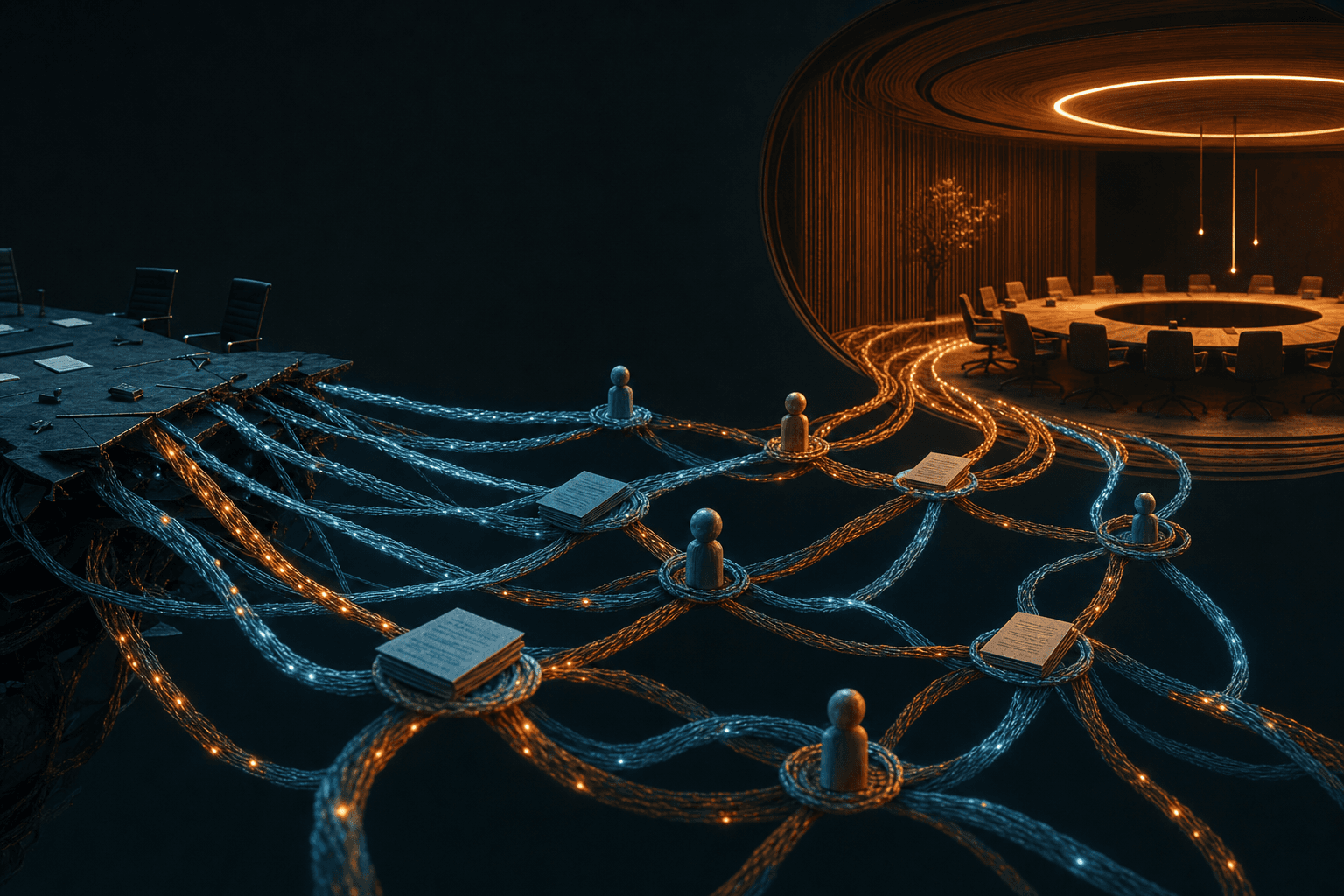
A consortium becomes a standing community when the project stops being the main reason to meet. Keep the people, the shared problem, the useful knowledge, and the habit of exchange in one operated place. Treat the final project phase as the start of community operations, not as a closing ceremony.
Start before the final report
The best time to build the future community is while the consortium still has attention, contracts, and trust. Do not wait until the last event. By then, partners are already moving to new calls, new boards, and new delivery pressure.
Use the final phase to name the community clearly. It should not be a copy of the project title unless that title still makes sense outside the grant. A good community name tells people what they can practise together: inclusive youth work, circular procurement, rural health data, civic participation, migrant support, climate adaptation.
Then separate the project archive from the living community. The archive stores deliverables, logos, reports, and evidence. The community space carries people, questions, cases, methods, events, and introductions. Both matter, but they need different rules.
Before the project ends, ask each partner for three assets:
- People who should stay involved.
- Knowledge that others can reuse.
- Questions that still need joint work.
This gives you a first member list, a first knowledge base, and a first agenda. That is enough to begin.
Convert partners into roles, not spectators
A funded consortium has work packages, reporting lines, and formal leads. A community of practice needs lighter roles. If the old structure remains unchanged, people feel as if the project never ended. If all structure disappears, activity fades.
Convert project roles into community roles that people can keep without a grant contract. A coordinator can become a convenor. A work package lead can become a theme host. A pilot partner can become a case owner. A dissemination partner can become an editor. An evaluator can become a learning steward.
Keep the role names practical. Each role should have a visible action attached to it:
- Convenors set the rhythm and invite members.
- Theme hosts gather questions and cases.
- Editors turn project outputs into usable guidance.
- Case owners share what happened after the pilot.
- Learning stewards collect evidence, gaps, and member needs.
This makes participation easier for NGOs, municipalities, universities, social enterprises, and informal networks. They can choose a contribution that fits their time and authority. The aim is not to preserve the consortium chart. The aim is to keep useful exchange alive.
Build one shared memory
Many project networks lose their memory because information sits in private drives, event recordings, inboxes, PDFs, and partner websites. A standing community needs one managed knowledge base. It should answer a basic member need: help me find the right person, method, document, case, or decision.
Start with a small structure. Use topics that match the field, not the grant form. Add project outputs, but rewrite their titles in member language. “Deliverable” is a reporting term. “Workshop format for youth councils” is a usable object. “Policy brief template for local coalitions” is another.
A good community platform should connect at least four kinds of content: people, organisations, knowledge objects, and events. When these are linked, a member can move from a method to the partner who tested it, from that partner to a recording, and from the recording to the next session. This is how an archive becomes a working memory.
AI can help, if it answers with sources and respects permissions. It should point to the original document, case, or event note. It should not replace human judgement. It should reduce search time and help newcomers understand what the group already knows.
Create a rhythm that survives funding cycles
Communities stay together through rhythm. The rhythm can be light, but it must be real. A dormant mailing list is not a community. A calendar with too many sessions is not sustainable either.
Define a simple operating pattern for the first period after the grant. Choose a recurring member session, a knowledge update, and a way to welcome new people. The content should come from current practice, not from past reporting tasks. Ask members what they are trying to solve now. Invite them to bring cases, tools, contacts, and mistakes.
A useful rhythm can include:
- A short member call around one practical question.
- A case clinic where one organisation asks for help.
- A knowledge note that turns discussion into reusable guidance.
- A member introduction round for newcomers.
- A planning thread for the next grant, campaign, or field action.
This rhythm also helps future funding. In our consortium graph, we track 83,490 projects and 461,953 participation links from 2014 to 2027 across Erasmus+, H2020, and Horizon Europe data. The organisations that appear again and again are not only good at applications. They keep relationships warm between applications.
Make ownership and operations explicit
A community needs an owner for decisions and an operator for daily care. These can be the same organisation, but the duties are different. Ownership answers: who sets the purpose, access rules, and public voice. Operations answers: who keeps the platform tidy, sends invitations, moderates discussions, updates content, and checks that members get value.
Do not leave these tasks as unpaid goodwill hidden inside one partner’s inbox. Write a light operating agreement. Define who can join, what members can see, how content is approved, how sensitive data is handled, and how the community can support future proposals without becoming only a proposal machine.
The platform should match the maturity of the group. Some communities need a private member area with profiles, topics, events, and a knowledge base. Others need a public catalogue, a searchable resource library, or an AI assistant grounded in approved sources. StrandsUnited can help design, build, and operate this layer when the consortium needs a digital partner rather than only a software vendor. You can see the type of work we do at strandsunited.com/what-we-do.
Your next step is simple: list the people, knowledge, and recurring questions that should still exist after the project website stops changing.
Where this comes from
This guidance comes from our work with community platforms, knowledge systems, and EU cooperation data. We operate Impactful, build private community and knowledge platforms, and maintain our consortium graph using CORDIS and Erasmus+ open data. That graph covers 114,731 organisations, including 1,717 organisations with at least five participations and 25,915 that have coordinated at least once. The pattern is clear in practice: a consortium becomes durable when relationships, memory, roles, and operations have a home beyond the grant.
Planning the digital side of a project?
We join consortia as the technical partner: platform work packages, knowledge systems, dissemination infrastructure that outlives the funding.